
On this page
Brits have been moving to Portugal for decades, from the Algarve retirees of the 1980s to the remote workers filling Lisbon cafés today. What changed is the paperwork. Since Brexit, a British passport is a non-EU passport in Portugal, and moving there now works much more like it does for Americans or Australians than it did before 2021.
This guide is the honest overview: what the rules are now, which visa fits which person, and the order to do things in. Rules and thresholds change often, so treat this as a map and check every figure with official sources (the Portuguese consulate, AIMA and GOV.UK's Living in Portugal pages) before you commit. Nothing here is legal or tax advice.
What Brexit actually changed
Before 2021, a British citizen could move to Portugal, register with the local council and get on with life. Now:
- As a visitor you get 90 days in any 180 across the whole Schengen area, Portugal included. Time spent in Spain or France counts towards the same 90 days.
- To live in Portugal you need a national residence visa issued before you travel, and then a residence permit from AIMA once you arrive.
- Brits who were already legally resident before the end of 2020 are covered by the Withdrawal Agreement and keep their rights. If that is you, make sure your residence document reflects that status.
Everyone else starts from the visa.
Which visa fits you
D7: pensions and passive income
The D7 is the classic route for retirees and anyone living on stable income that does not come from a Portuguese job: pensions, rental income, dividends. The income threshold is tied to the Portuguese minimum wage (at least 100% of it for the main applicant, plus a percentage for a spouse and children). Check the current figure at the time you apply, because the minimum wage rises most years.
D8: remote work
The D8, the digital nomad visa, is for people employed by, or freelancing for, clients outside Portugal. The income bar is much higher than the D7, around four times the Portuguese minimum wage. Again, verify the number when you apply.
Other routes
- D1 and D3 if you have a job offer from a Portuguese employer (D3 for highly qualified roles).
- D2 if you plan to set up a business or work as an independent professional in Portugal.
- D4 for study.
If you are torn between D7 and D8, our D7 vs D8 comparison goes through the trade-offs.
The paperwork, in order
- Get a NIF. Your Portuguese tax number comes before almost everything else: bank account, lease, utilities. You can get it through a fiscal representative before you leave the UK. Our NIF guide covers both routes.
- Open a Portuguese bank account. You will use it for the visa's proof of funds and for daily life.
- Secure accommodation. The visa application needs proof of where you will live, usually a lease registered with Finanças.
- Apply at the Portuguese consulate in London (or the visa centre it uses) with income proof, a UK criminal record certificate, accommodation, travel and health insurance.
- Travel and attend your AIMA appointment to turn the visa into a residence permit. Appointments can take months, so bring originals and copies of everything. Our AIMA appointment guide lists what to take.
- Register for healthcare, social security and your local health centre once you are resident.
Healthcare
How you access the Portuguese health service (the SNS) depends on your situation:
- If you receive the UK State Pension, ask NHS Overseas Healthcare Services about the S1 form. Registered with Portuguese social security, it gives you access to state healthcare in Portugal, with the cost covered by the UK.
- If you are working or living on other income, you register with the SNS through your local health centre once you have residency, and get a número de utente.
- For the visa itself, you will usually need private health or travel insurance that covers you until you are registered.
The UK Global Health Insurance Card (GHIC) is for temporary stays. It is not a substitute for registering when you live there.
Pensions and tax
Portugal and the UK have a double taxation agreement, which decides which country taxes what. As a broad rule, UK government service pensions (civil service and armed forces pensions, for example) usually stay taxed in the UK, while most private and workplace pensions become taxable in Portugal once you are Portuguese tax resident. Your UK State Pension can be paid into an overseas account.
The old NHR tax regime closed to new applicants in 2024. Its replacement, often called IFICI, targets specific qualified professions, not retirees in general. With this much at stake, a cross-border tax adviser who knows both systems is worth paying for before you move, not after.
One practical warning: some UK banks restrict or close accounts for customers who live abroad. Check your bank's policy before you go, and keep at least one UK account you know you can use.
Driving and pets
- Driving licence. A UK licence is fine while you are visiting. Once you become resident, you are expected to exchange it for a Portuguese licence through IMT, Portugal's transport authority. Check the deadline that applies when you get your residence permit; leaving it too late can mean sitting a test.
- Pets. Dogs, cats and ferrets travelling from Great Britain to the EU need an animal health certificate from an official vet, a microchip and a rabies vaccination, issued within the right window before travel.
Where Brits tend to settle
The Algarve still has the largest British community, with English widely spoken in towns like Lagos, Tavira and Loulé. Lisbon and its coast (Cascais, Ericeira) suit remote workers who want city life. Porto, the Silver Coast and the interior offer more space for less money. Our guide to the best places to live in Portugal and the cost of living breakdown will help you compare.
Citizenship and the language
Citizenship rules changed in 2026: Parliament approved a longer residence requirement for many new arrivals, up from the old five years, with transitional rules for people already resident. Check the final version that applies to your arrival date before you plan around it.
Whatever the timeline, citizenship needs Portuguese at A2 level, usually proven with the CIPLE exam. Our A2 citizenship test guide explains the format.
More importantly, the language decides how Portugal feels day to day. Outside the Algarve's British bubble, the health centre, the Câmara, your landlord and your neighbours work in Portuguese. And it has to be European Portuguese: most apps teach the Brazilian variety, which sounds and often reads differently.
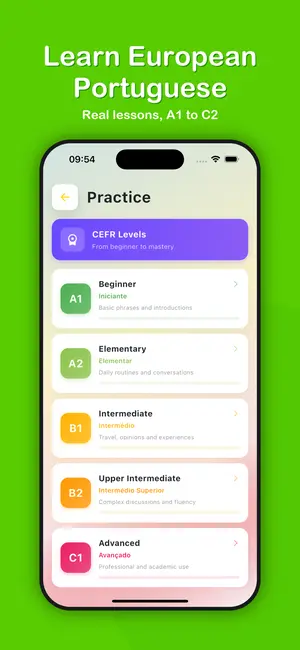
That is what Portugal Lifestyle Pro is built for. It teaches the Portuguese spoken in Lisbon and Porto, from your first words up to the level you need for citizenship, with AIMA, NIF and visa guides inside the app. If you would rather learn by doing, Expats In Portugal lets you practise real conversations in a little Portuguese town before you live in a real one.
Get Portugal Lifestyle Pro on the App Store →
The short version
- Work out your route (D7, D8 or a work visa) and check the current income figures.
- Get your NIF and a Portuguese bank account early.
- Sort healthcare (S1 if you are a State Pensioner) and get tax advice before you move.
- Exchange your driving licence once you are resident.
- Start learning European Portuguese now. It is the one step nobody regrets doing early.
Planning from somewhere else? See our guides for moving from the US, Germany and Australia, or start at our Moving to Portugal hub.
Written by PG App Studios
An independent app studio in the Algarve run by Pedro Gregório. We write about the problems our apps solve, from learning European Portuguese to raising a toddler.