
On this page
If you are planning to move to Portugal, you have probably run into two visa names over and over: the D7 and the D8. They are the most popular residency routes for non-EU citizens, and they sometimes get lumped together — but they are built for different people with different kinds of income. Choosing the right one from the start saves you time, money, and paperwork headaches.
Before we dig in: immigration rules and income thresholds change regularly, so treat everything below as a general overview. Always confirm the current requirements with official sources like AIMA and a Portuguese consulate. This is not legal advice.
The core difference in one line
- D7 is for people with stable passive income — pensions, rental income, dividends, investments.
- D8 is for people who actively work remotely for clients or employers outside Portugal.
If your money arrives without you clocking in, the D7 is usually your route. If you work a remote job or run a location-independent business, the D8 is designed for you.
The D7 Visa — passive income and retirement
The D7 was originally created for retirees and people living off savings or investments. It has become one of the most-used routes into Portugal because the income bar is relatively accessible.
Who it suits:
- Retirees with a pension
- People with rental income from properties abroad
- Investors living off dividends or interest
- Anyone with reliable, recurring non-employment income
Income requirement (general): You typically need to show passive income at least around the level of the Portuguese minimum wage, with additional amounts for a spouse and children. Verify the current figures — they are adjusted over time.
The D8 Visa — digital nomads and remote workers
The D8, often called the digital nomad visa, is newer and built for the modern remote worker. It recognises that plenty of people earn good incomes working for companies or clients that have nothing to do with Portugal.
Who it suits:
- Remote employees of a non-Portuguese company
- Freelancers and contractors with foreign clients
- Founders running a location-independent business
Income requirement (general): The D8 asks for a noticeably higher income than the D7 — commonly described as around four times the Portuguese minimum wage per month, sometimes with savings requirements too. Always confirm the exact current threshold before applying.
Side-by-side comparison
| Factor | D7 | D8 |
|---|---|---|
| Best for | Passive income / retirees | Remote workers / nomads |
| Income type | Pensions, rent, dividends | Remote salary or freelance income |
| Income level | Around minimum wage (verify) | Around 4x minimum wage (verify) |
| Typical applicant | Retiree, investor | Digital professional |
| Path to residency | Yes | Yes |
| Path to citizenship | Yes, over time | Yes, over time |
Both visas lead to temporary residency that you renew, and both can eventually open a path toward permanent residency or citizenship if you meet the requirements — including language.
Pros and cons
D7 — pros and cons
Pros: lower income bar, well-established route, ideal for retirees, straightforward if your income is genuinely passive.
Cons: your income must be clearly passive and documented; active remote work income can complicate things; some applicants get pushed toward the D8 if their income looks like employment.
D8 — pros and cons
Pros: purpose-built for remote workers, clearly legitimises location-independent income, modern and increasingly common.
Cons: higher income requirement, more scrutiny of employment contracts and client relationships, more documentation of your work setup.
How to decide
Ask yourself one question: does my income depend on me actively working?
- If no — you live off pensions, rent, or investments — look at the D7.
- If yes — you have a remote job or freelance clients — look at the D8.
If your situation is mixed (say, a small pension plus freelance work), talk to a Portuguese immigration lawyer. Edge cases are exactly where professional advice pays for itself, because the wrong choice can mean a rejected application and months of lost time.
Don't forget the language requirement
Whichever visa you choose, both lead toward the same long-term milestones — renewing residency, and eventually the possibility of permanent residency or citizenship. And citizenship in Portugal requires demonstrating Portuguese at the A2 level. That is a basic but genuine standard, and it is far easier to reach if you start early rather than cramming years later.
There is a common trap here: most language apps teach Brazilian Portuguese by default, which has a different accent and vocabulary from the European Portuguese you need in Portugal. Learning the wrong variety means relearning later.
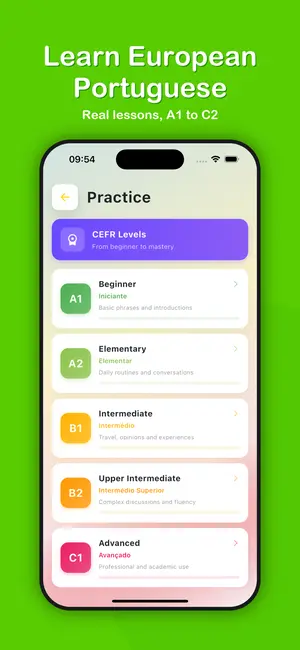
Portugal Lifestyle Pro is built specifically for European Portuguese, taking you from beginner up through the A2 level that matters for citizenship — plus the everyday phrases you will use at AIMA, the bank, and around town. Whether you land on the D7 or the D8, starting the language now makes daily life and every future appointment smoother.
Download Portugal Lifestyle Pro Free →
Bottom line
The D7 and D8 are not competitors — they are tools for different situations. Match the visa to the type of income you have, verify the current thresholds with official sources, get professional help for anything ambiguous, and start learning European Portuguese in parallel. Do those things and you set yourself up for a move that actually works.
Written by PG App Studios
An independent app studio in the Algarve run by Pedro Gregório. We write about the problems our apps solve, from learning European Portuguese to raising a toddler.