On this page
Walking does not get the respect it deserves. It is not flashy, it does not leave you drenched, and no one posts about it. But it is one of the most sustainable, joint-friendly, and genuinely effective ways to lose weight and stay healthy, and almost anyone can do it starting today.
Let's clear up the famous 10,000-step number, talk about what target actually makes sense for you, and cover how to turn walking from a chore into something you just do.
Why Walking Works So Well
The best exercise is the one you actually keep doing, and walking wins on that front hands down. It needs no gym, no equipment, and no recovery days. You can do it in a suit or in gym clothes, alone or with company.
It burns steady, sustainable energy
Walking burns calories without wrecking you. Because it is low intensity, you can do a lot of it, day after day, and it adds up to real energy expenditure over a week.
It is kind to your body
Running and high-intensity work pound your joints and demand recovery. Walking is gentle enough to do daily, which is exactly why it is so effective. Consistency, not intensity, drives fat loss over months.
It does not spike your appetite
Hard workouts can leave you ravenous and eating back everything you burned. Walking rarely triggers that response, so the deficit tends to stick.
It clears your head
Beyond the physical, walking lowers stress and lifts your mood. Lower stress helps with the hormones tied to weight, and a clearer head makes better food choices easier.
The Truth About 10,000 Steps
Here is a fact that surprises people: the 10,000-step target did not come from science. It traces back to a marketing campaign for a pedometer sold decades ago. The round number stuck, and now everyone treats it as gospel.
That does not mean 10,000 is a bad goal. It is a solid, ambitious target. But treating it as a magic threshold you must hit or fail is where people get discouraged and quit.
The real research tells a more encouraging story: meaningful health benefits show up well below 10,000 steps, and the gains climb as you add more. In other words, every step counts, and you do not need to hit a magic number to benefit.
Realistic Step Targets That Actually Work
Instead of fixating on 10,000, meet yourself where you are and build up.
| Your current level | Daily step goal | The idea |
|---|---|---|
| Mostly sedentary | 4,000 to 5,000 | Just get moving consistently |
| Getting going | 6,000 to 7,500 | Solid health benefits kick in |
| Active | 8,000 to 10,000 | Strong support for weight loss |
| Ambitious | 10,000+ | Great, if it fits your life |
Find your honest starting point by tracking a normal day first. Then add roughly 1,000 steps to your daily average every week or two. Small, steady increases stick. Giant leaps burn you out.
The goal is not to hit some number once and celebrate. It is to raise your daily average and hold it there for good.
Building the Habit
Steps only help if you take them consistently, so the whole game is making walking automatic.
Stack it onto your day
You do not need to carve out a big block. Park farther away, take the stairs, walk while you are on calls, get off transit a stop early. These bits pile up faster than you think.
Make it a daily ritual
A walk after lunch or dinner does double duty: it adds steps and helps digestion. Same time, same route, and soon your body just expects it.
Walk with someone
A friend, a partner, or a dog turns exercise into something you look forward to. Company also makes you far more likely to actually show up.
Make it enjoyable
A good podcast, an audiobook, or a playlist turns walking into your favorite part of the day rather than a task to endure.
Pairing Walking With Diet
Walking is powerful, but it works best alongside sensible eating. You cannot outwalk a genuinely bad diet, and you do not have to try. The two work together.
Think of it simply. Walking helps create a modest calorie deficit through movement. Reasonable eating supports that deficit from the other side. Neither has to be extreme when they team up. A daily walk plus not overeating beats punishing workouts paired with willpower battles every time.
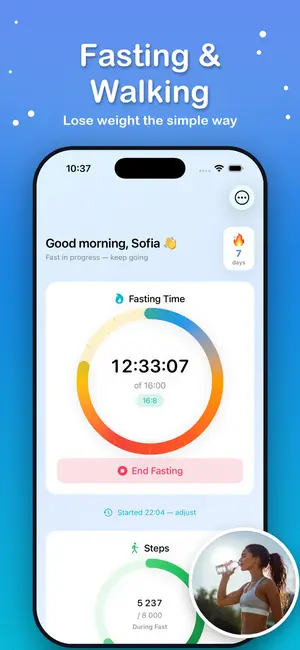
This is exactly why Fasting and Walking pairs the two on purpose. It tracks your walking alongside your fasting window so your movement and your eating pattern reinforce each other, giving you the full picture in one place instead of juggling separate apps. It keeps the whole thing simple, which is the only way habits last.
Download Fasting and Walking Free →
Discover how it works: Fasting and Walking.
A Quick Note on Getting Started
If you have been inactive for a while or have any health concerns, ease in and check with your doctor before ramping up. Walking is gentle, but starting sensibly and building gradually is always the smart move. Good shoes help too, more than people expect.
The Bottom Line
Walking is the most accessible weight-loss tool there is. Forget the pressure of hitting exactly 10,000 steps. Find your current average, add a little each week, and turn a daily walk into a ritual you actually enjoy.
Pair those steps with reasonable eating and you have a combination that is gentle, sustainable, and genuinely effective. No gym, no gear, no drama. Just put one foot in front of the other, keep at it, and let the steps add up.
Written by PG App Studios
An independent app studio in the Algarve run by Pedro Gregório. We write about the problems our apps solve, from learning European Portuguese to raising a toddler.