On this page
Some things are good on their own but great together. Fasting and walking are exactly that pairing. Each one is a proven, gentle way to support weight loss and health. Stack them and they amplify each other, without either one having to be extreme.
The best part is that neither requires a gym, special gear, or brutal effort. This is about as approachable as a fitness routine gets, which is precisely why it tends to stick. Let's look at why the combination works and how to actually do it.
Why the Two Pair So Well
On the surface they seem unrelated. One is about when you eat, the other about moving your body. But they line up beautifully.
They both nudge you toward a gentle deficit
Fasting naturally trims your eating window, which tends to reduce how much you eat overall. Walking adds movement that burns steady energy. Put them together and you create a modest calorie deficit from both directions, without starving or exhausting yourself.
Neither one is harsh
This is the key. You could pair crash dieting with punishing workouts, but nobody keeps that up. Fasting and walking are both gentle enough to do day after day, and consistency is what actually moves the needle over weeks and months.
They stack into your existing routine
A walk fits into your morning or your lunch break. A fasting window mostly overlaps with sleep. Neither demands you rearrange your life, so you are far more likely to keep going.
They reinforce good habits
When you are already being mindful about when you eat, you tend to make better food choices in your eating window too. Walking clears your head and lowers stress, which also supports better decisions. The habits feed each other.
Fasted Walking Basics
Fasted walking simply means going for a walk during your fasting window, before you have eaten. It sounds intense but it is one of the gentlest ways to add movement, and plenty of people find it energizing.
Why do it fasted
When you have not eaten for a while, your body is more inclined to draw on stored energy during light activity. For a low-intensity walk, this is a comfortable, sustainable way to move. You are not sprinting, so you do not need a pre-workout meal.
It is genuinely easy
A relaxed morning walk before breakfast, or a stroll near the end of your overnight fast, fits naturally. Many people find they feel light and clear-headed walking on an empty stomach.
Keep it low intensity
This matters. Fasted walking works because it is easy. Do not try to turn it into a hard run or an intense session while fasting, especially when you are starting out. Keep it to a comfortable pace where you could hold a conversation.
Listen to your body
If you feel dizzy, weak, or off, stop, sit down, and eat something. This should feel good, not like you are pushing through a wall. There is no prize for suffering.
A Simple Weekly Routine
You do not need anything complicated. Here is a gentle, beginner-friendly structure you can adapt to your life.
| Day | Fasting window | Walk |
|---|---|---|
| Monday | 14:10 | 20 to 30 min fasted morning walk |
| Tuesday | 14:10 | 20 to 30 min anytime |
| Wednesday | 14:10 | Rest or light stroll |
| Thursday | 14:10 | 20 to 30 min fasted morning walk |
| Friday | 14:10 | 20 to 30 min anytime |
| Saturday | 12:12 | Longer relaxed walk, 40+ min |
| Sunday | 12:12 | Rest or gentle stroll |
Notice a few things. The fasting is a comfortable 14:10 on most days, easing to 12:12 on the weekend. The walks are short and doable. There are genuine rest days. This is a routine you can actually keep, not a boot camp.
As it becomes easy, you can extend your walks, tighten your fasting window toward 16:8, or add a day. Build slowly. The whole point is sustainability.
Making It Effortless
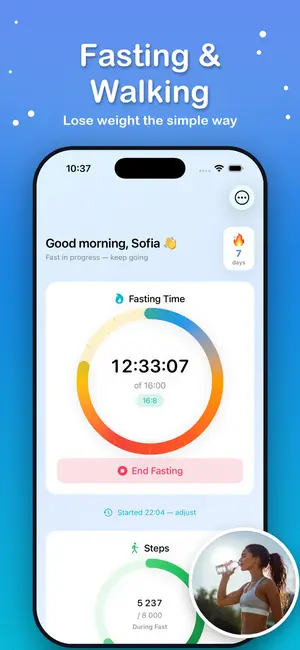
The friction with any routine is tracking it and staying consistent, and this is where the right tool matters. Fasting and Walking was built for exactly this combination. It tracks your fasting window and your walking side by side, so instead of juggling two separate things, you see how they work together in one place. That single view is a genuine motivator, because you can watch both habits reinforcing each other day after day.
Download Fasting and Walking Free →
Take a closer look: Fasting and Walking.
Safety Notes
This routine is gentle, but a few common-sense points keep it that way.
- Check with your doctor first if you are pregnant, breastfeeding, have diabetes, take medication that affects blood sugar, or have any medical condition. Fasting is not right for everyone.
- Hydrate through your fast. Water, black coffee, and plain tea are fine and help a lot. A fasted walk plus dehydration is a recipe for feeling lousy.
- Do not stack intensity onto fasting when you are new. Keep walks easy. Save hard training for your fed hours.
- Ease in. Start with shorter fasts and shorter walks, then build. Rushing leads to burnout or feeling unwell.
- Eat well in your window. Fasting and walking create the deficit, but your body still needs real, nourishing food to feel good and recover.
The Bottom Line
Fasting and walking work so well together because they are both gentle, both sustainable, and both nudge you toward a healthy deficit from different angles. Add in fasted walking, keep it low intensity, and follow a simple weekly rhythm you can actually maintain.
Start easy, hydrate, get your doctor's okay if you have any health concerns, and let the two habits build on each other. No extremes required. Just a walk and a well-timed eating window, done consistently, quietly doing their work.
Written by PG App Studios
An independent app studio in the Algarve run by Pedro Gregório. We write about the problems our apps solve, from learning European Portuguese to raising a toddler.