
On this page
Almost everyone who values scripture wants to read it more consistently. Yet the daily habit is where good intentions quietly fade. The problem is rarely a lack of desire. It is that most people rely on motivation, and motivation is unreliable. A habit that lasts is built on design, not willpower. Here is a gentle, practical approach to making daily Bible study something that actually sticks.
Start Absurdly Small
The most common mistake is starting too big. An ambitious plan to read several chapters a day feels inspiring on day one and impossible by day four. Habits form through repetition, and repetition depends on the task being easy enough to repeat even on your worst day.
Begin with something almost too small to fail. One verse. One short passage. Five minutes. The goal at the start is not depth but consistency. Once showing up becomes automatic, the depth grows naturally. You can always read more, but you can never get back a broken streak that discouraged you into quitting.
Anchor It to Something You Already Do
Willpower fades, but existing routines are rock solid. The easiest way to build a new habit is to attach it to one you already have. This is often called habit stacking.
Pick a daily anchor and link your reading to it:
- After I pour my morning coffee, I read one passage.
- After I sit down on my commute, I open my reading.
- Before I turn off the light at night, I read a few verses.
The existing action becomes the reminder. You stop relying on remembering, because the anchor does the remembering for you.
Choose a Time and Protect It
Consistency loves a fixed time. Many people find the morning works best, before the day fills with demands and distractions. Others prefer the quiet of the evening. There is no holy hour that works for everyone, so choose the slot you can realistically defend most days.
Once you pick it, treat it as a small appointment. Not a heavy obligation, but a gentle commitment you keep with yourself. Protecting even five minutes signals that this matters, and that quiet consistency compounds over months.
Create a Place
Environment shapes behaviour more than we like to admit. A dedicated spot for reading, a favourite chair, a corner of the kitchen table, a particular bench, gives your habit a physical home. Over time your brain associates that place with reflection, and simply sitting there helps you settle into the practice.
Keep whatever you need within reach so there is no friction. When starting is effortless, you start. When it requires hunting for things, you find reasons to skip.
Follow a Plan, Not Just a Whim
Opening scripture at random can work occasionally, but it often leads to aimless flicking and eventual drift. A simple plan removes the daily decision of what to read, and removing decisions removes excuses.
You might read through a single book slowly, follow a themed plan, or work through a structured reading list. The specific plan matters less than having one. A clear next step each day keeps momentum going, because you never sit down wondering where to begin.
Reflect, Do Not Just Read
Reading and absorbing are different things. To move from skimming words to genuine study, pause and engage with what you read. A few gentle questions help:
- What does this passage say?
- What stands out or surprises me today?
- How might this shape my thinking or actions?
Even one honest reflection turns a passive read into something that stays with you through the day. You do not need to be a scholar. Curiosity and honesty are enough.
Track Your Progress Gently
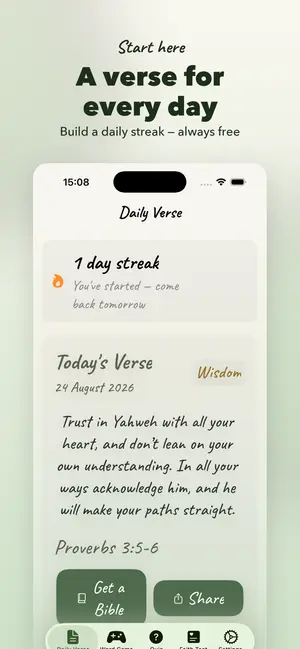
Seeing evidence of consistency is quietly motivating. Marking each day you read, whether with a simple streak, a checkmark, or a short note about what stood out, gives your habit a visible shape. Progress you can see encourages you to keep going, and a short journal of reflections becomes something meaningful to look back on months later. Keep it light. The point of tracking is encouragement, not pressure. If a streak ever starts to feel like an anxious obligation rather than a gentle prompt, let it go and focus on simply returning to the reading itself.
Find a Companion for the Journey
Habits grow stronger in community. Sharing what you are reading with a friend, a family member, or a small group adds gentle accountability and turns a private practice into a shared one. Talking through a passage often surfaces insights you would never reach alone, and knowing someone will ask how your reading is going makes it easier to show up. Even a single conversation partner can make the difference between a habit that fades and one that lasts.
Expect to Miss, and Return Gently
No one keeps a perfect streak forever. Life interrupts, days get away from us, and eventually you will miss a day. The habit does not die because you missed once. It dies when a single miss becomes a spiral of guilt that keeps you away.
The practice that lasts is the one you return to without shame. Miss a day, and simply begin again the next. Grace applies to habits too. Progress is measured over months and years, not in unbroken chains.
Let a Gentle Daily Nudge Reinforce It
Habits stick more easily when there is a small, enjoyable cue pulling you back each day. A brief, low-pressure interaction with scripture can be that cue, turning a spare moment into a meaningful one.
Bible: Test Your Faith is designed to do exactly that. It offers gentle daily Bible questions and inspiring verses that make returning to scripture feel light and rewarding rather than daunting. A few minutes of thoughtful questions can reinforce what you are reading, deepen your understanding over time, and give your daily habit a friendly anchor. It suits all ages and meets you wherever you are, whether you are just beginning or have read scripture for years.
Download Bible: Test Your Faith Free →
Learn more on the Bible: Test Your Faith page.
The Takeaway
A lasting Bible study habit is not about intensity or willpower. It is about small steps, a fixed time and place, a simple plan, honest reflection, and grace when you slip. Start smaller than feels impressive, anchor it to your day, and let a gentle daily nudge keep you coming back. Consistency, not perfection, is what turns scripture from an occasional visitor into a quiet daily companion.
Written by PG App Studios
An independent app studio in the Algarve run by Pedro Gregório. We write about the problems our apps solve, from learning European Portuguese to raising a toddler.