On this page
Dating apps have spent years optimising for the swipe — fast, photo-first, endlessly shallow. And a lot of people are burnt out on it. The quiet shift happening in 2026 is people wanting apps built around who they actually are and how they actually live, not just how they photograph. Fitness dating apps sit right at the centre of that shift, and they're growing fast. Here's why, and what to think about if you're curious.
The rise of shared-values dating
The big trend underneath all of this is simple: people increasingly want to match on lifestyle and values, not just looks. Swipe fatigue is real, and endless matches that go nowhere have pushed people toward apps with a clear filter — a shared interest, a shared community, a shared way of living.
Fitness is one of the most powerful of those filters, because it's not a hobby you dabble in. For a lot of people, training is woven into their daily routine, their weekends, their diet, their sleep, and their sense of identity. Meeting someone who lives the same way removes an enormous amount of friction before you've even had the first coffee.
Why fitness compatibility genuinely matters
It's easy to dismiss "we both like the gym" as a shallow thing to build a connection on. It isn't, and here's why.
It shapes your daily rhythm
An active lifestyle affects when you wake up, how you spend your weekends, what you eat, and how you unwind. If one person's ideal Saturday is a long hike and the other's is a hangover on the sofa, that's not a small gap — it's a daily source of friction. Shared fitness habits mean your routines naturally fit together.
It's a proxy for deeper values
People who prioritise their health tend to share adjacent traits: discipline, consistency, goal-setting, and follow-through. You're not really matching on "likes exercise." You're matching on a mindset. That shared drive often translates into how someone approaches their career, their commitments, and a relationship itself.
You get a built-in shared activity
Couples who train together have a ready-made way to spend time, support each other, and stay connected. A workout partner who's also your partner is a genuinely nice thing. Shared goals build a kind of teamwork that's hard to manufacture otherwise.
It signals effort and self-respect
Taking care of your body is, for many people, a sign that someone takes care of themselves generally. That's an attractive baseline — not about aesthetics, but about someone who invests in their own wellbeing and is likely to invest in a partnership too.
What to look for in a fitness-minded match
If you're leaning into this, a few things are worth paying attention to beyond "do they lift."
- Compatible intensity. A weekend jogger and a competitive athlete can absolutely work, but be honest about whether your lifestyles actually mesh day to day.
- The "why" behind their fitness. Someone training for mental health versus someone chasing pure aesthetics may approach a lot of things differently. Neither is wrong — just know what drives them.
- Flexibility. The healthiest active people have balance. Someone who can't ever skip a session for a spontaneous plan might be tougher to build a life around than someone with strong but adaptable habits.
- Genuine shared enjoyment. The best sign is when working out together sounds fun, not like a chore you're both tolerating.
Where GritVit fits in
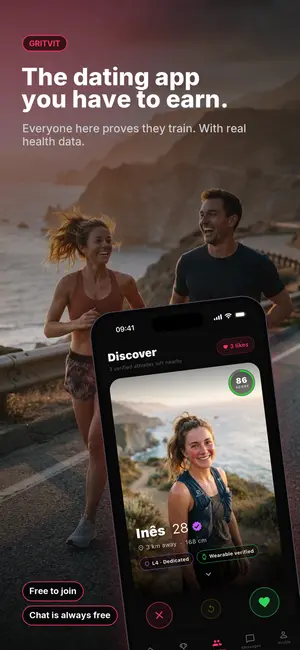
If matching on fitness sounds like your thing, this is exactly the gap GritVit was built to fill. It's a fitness dating app for people who take an active lifestyle seriously and want to meet someone who does too — instead of endlessly explaining on a generic app why you're up at 6am on a Sunday.
The whole premise is compatibility that's real, not just a bio line. GritVit connects active, health-focused people around shared commitment to fitness, so the person on the other end of the match already gets that side of your life. For anyone tired of matches that fizzle the moment lifestyles clash, starting from a shared foundation changes the whole experience.
Learn more about it on the GritVit page.
The honest caveats
Fitness compatibility is a fantastic filter, but it isn't the whole picture, and it's worth saying so. Shared gym habits won't paper over a mismatch in humour, life goals, communication, or values that go beyond the treadmill. Think of fitness as a strong starting point that clears away one big source of friction — not a guarantee. The best relationships still need everything the shared workout can't provide.
It's also worth keeping perspective: an active lifestyle comes in countless forms, from marathon runners to yoga devotees to people who just genuinely enjoy staying moving. You don't need to be an elite athlete to want a partner who values health. The point is alignment, not intensity for its own sake.
The takeaway
Fitness dating apps are growing in 2026 because they solve a real problem: people want partners whose daily lives, values and energy actually match theirs, and generic swiping rarely delivers that. Fitness is a uniquely strong signal for compatibility because it touches routine, discipline and identity all at once.
If that resonates, it might be worth meeting people on the same wavelength from the start. Match on how you live, not just how you look — and see where it goes.
Written by PG App Studios
An independent app studio in the Algarve run by Pedro Gregório. We write about the problems our apps solve, from learning European Portuguese to raising a toddler.