On this page
Every cyclist eventually faces the same friendly argument: road, gravel, or mountain? There is no single right answer. Each discipline rewards different things, and the best one for you depends on where you ride, what you enjoy, and how much you want to spend. Here is an honest breakdown to help you choose.
The Three Disciplines at a Glance
Road Cycling
Road cycling is about smooth tarmac, speed, and distance. You ride a lightweight bike with skinny tyres and drop handlebars, chasing efficiency. It is the discipline of the Tour de France, of long Sunday café rides, and of watching your average speed climb week after week. If you love the feeling of covering big miles and the meditative rhythm of steady pedalling, road is hard to beat.
Gravel Cycling
Gravel is the fastest-growing corner of the sport, and for good reason. It blends the speed of road with the freedom of off-road. Gravel bikes look like beefed-up road bikes with wider tyres and clearance for mud. You can ride them on tarmac, farm tracks, forest roads, and light singletrack. Gravel is less about pace and more about adventure. It gets you away from traffic and onto quiet routes most people never see.
Mountain Biking (MTB)
Mountain biking is the most technical and physical of the three. You ride rugged trails, rocky descents, roots, and steep climbs on a bike built to take a beating. Full suspension, fat knobby tyres, and powerful disc brakes let you tackle terrain that would destroy a road bike. MTB is playful, adrenaline-fuelled, and skill-heavy. Every trail is a puzzle you solve with your body.
Comparison Table
| Factor | Road | Gravel | MTB |
|---|---|---|---|
| Terrain | Tarmac | Mixed surfaces | Trails, rocks, dirt |
| Tyre width | Narrow | Medium | Wide, knobby |
| Speed | Fastest | Medium | Slowest average |
| Technical skill | Low to medium | Medium | High |
| Traffic exposure | High | Low | Very low |
| Entry cost | Medium to high | Medium | Medium to high |
| Best for | Fitness, distance | Adventure, variety | Skills, thrills |
Terrain and Where You Live
Where you live matters more than any spec sheet. If you are surrounded by smooth roads and quiet lanes, road cycling makes sense. If you have forest tracks, canal paths, or farm roads nearby, gravel opens up a whole network of car-free riding. If you live near hills, woods, or purpose-built trail centres, mountain biking will feel like the natural choice.
Be honest about your local reality. A road bike is frustrating on rough ground, and a heavy mountain bike feels sluggish on long tarmac stretches. Match the bike to the terrain you can actually reach from your front door.
The Bikes and What They Cost
All three disciplines can be entered affordably or turned into money pits, depending on how deep you go. A solid entry-level bike in any category is a reasonable investment, and second-hand bikes offer excellent value if you shop carefully.
- Road bikes prize low weight and aerodynamics. Upgrades tend to focus on wheels and groupsets.
- Gravel bikes are versatile and often the best value because one bike does many jobs. Many riders own only a gravel bike and never feel limited.
- Mountain bikes carry the most complex components, especially suspension, which adds cost and maintenance. Budget for servicing forks and shocks over time.
If you can only own one bike and want maximum flexibility, gravel is usually the smartest first purchase.
Fitness and Effort
The three disciplines build fitness differently. Road cycling develops sustained aerobic endurance and is ideal for tracking measurable progress like FTP and average speed. Gravel demands a broader mix of endurance and handling, with punchy efforts over changing surfaces. Mountain biking is a full-body workout that hammers your legs, core, and arms, with short intense bursts rather than steady output.
None is objectively harder. A three-hour road ride and a ninety-minute technical trail session can leave you equally wrecked in completely different ways.
The Vibe
Culture is a real factor. Road cycling has a structured, performance-focused community that loves group rides, kit, and data. Gravel attracts a relaxed, adventurous crowd who care more about the route and the coffee stop than the numbers. Mountain biking has a playful, skills-driven energy where the reward is nailing a tricky section and whooping at the bottom of a descent.
Pick the vibe that makes you smile. The discipline you enjoy socially is the one you will actually stick with.
How to Choose
Ask yourself three questions:
- What terrain can I reach easily? Ride what is near you.
- What do I want from cycling? Fitness and distance point to road. Adventure and variety point to gravel. Skills and thrills point to MTB.
- What is my budget and appetite for maintenance? Simpler bikes mean lower running costs.
If you are still unsure, start with gravel. It is the most forgiving all-rounder, it keeps you off busy roads, and it lets you sample a bit of everything before committing.
Finding Riders in Your Discipline
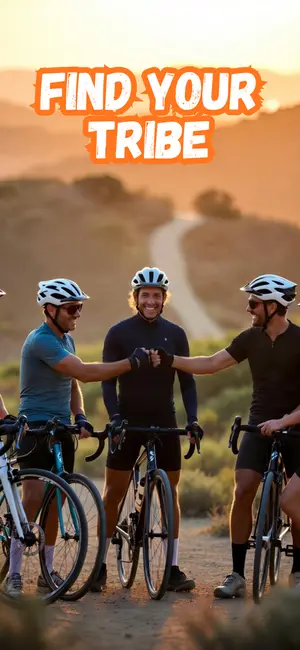
Whatever you choose, cycling is far better with company. Group rides keep you motivated, teach you skills faster, and turn a solo hobby into a social one. The hard part is finding people who ride your discipline at your level near you.
That is exactly what CycleBuddy was built for. It helps you find riders and group rides that match your discipline, pace, and location, whether you are a road roadie chasing miles, a gravel explorer hunting new routes, or a mountain biker looking for trail partners. Instead of guessing whether a ride will suit you, you can connect with cyclists who ride the way you do.
Learn more about the app on the CycleBuddy page.
The Bottom Line
There is no wrong choice, only the choice that fits your roads, your goals, and your idea of fun. Try to borrow or demo a bike before you buy, ride with people who know each discipline, and remember that many cyclists happily switch between all three over the years. The best type of cycling is simply the one that gets you out the door.
Written by PG App Studios
An independent app studio in the Algarve run by Pedro Gregório. We write about the problems our apps solve, from learning European Portuguese to raising a toddler.